


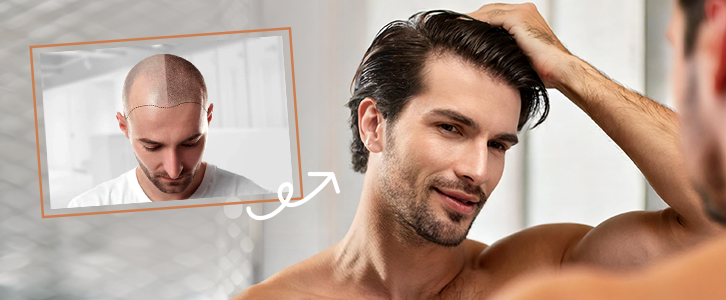
Tips for Best Results After Hair Transplant: A Complete Guide to immediate post-op care and long term maximum hair growth
|
Don't leave yet. We have a special offer for you!
|
A successful hair transplant is just the beginning of your journey to fuller, healthier hair. Proper post-operative care is crucial to achieving the best results and minimizing complications. A hair transplant is a significant emotional and financial investment, and it would be a shame to compromise the outcome by neglecting the recommended aftercare routine.
This guide provides a step-by-step care plan for the first 30 days post-transplant and outlines a long-term protocol to maintain and maximize results. By following these guidelines, you can ensure optimal hair growth and long-lasting success.
"Medically reviewed by Ms. Madlena Epreman (Senior Hair Restoration Specialist) and Dr. Ron Shapiro (Senior Hair Restoration Surgeon)"
After surgery, you may experience mild pain, swelling, and redness. Your scalp is highly sensitive, so taking precautions is essential:
Avoid touching the grafts to prevent infection and dislodging of follicles.
Sleep with your head elevated at a 20-30 degree angle for the first 5-7 nights to reduce swelling.
Take prescribed medications (antibiotics, anti-inflammatories) to ease discomfort and promote healing.
Avoid alcohol, ibuprofen (Advil/Motrin), and aspirin for at least 48 hours.
Expect some oozing during sleep; use a towel or disposable chuck pad to protect your pillow. If the donor area oozes, apply continuous pressure for 10-20 minutes.
Apply ice packs to your forehead (not the grafts) for 15-20 minutes at a time to minimize swelling.
Remove the light dressing the morning after surgery.
First 24 hours: Spray both donor and recipient areas with a sterile saline solution every hour to keep them moist and clean. Do not apply ointments.
No washing yet – your scalp needs time to stabilize before introducing shampoo.
Continue avoiding direct sunlight and intense activities .
Continue cold compresses, forehead massages, elevated sleeping, and saline spraying .
Do not touch the grafts to prevent dislodging.
Shampooing: Wash your hair 48 hours after surgery with a gentle, chemical-free shampoo.
Use the pouring method instead of direct shower pressure: Fill a large plastic cup with water, pour it over your scalp, apply shampoo, then rinse gently.
The donor area may be massaged with fingertips, but avoid rubbing the recipient area for 10-14 days.
Recommended shampoo: HairSmart Gentle RSH Therapy Shampoo (sulfate- and paraben-free).
You may dry hair gently using a dryer in a cool setting.
Monitor for infection signs such as excessive redness, pus, or unusual pain.
Continue washing hair gently with HairSmart Gentle RSH Therapy Shampoo.
Avoid direct water pressure on grafts ; continue using the pouring method.
Keep hydrating the scalp with a sterile saline spray.
Do not pick scabs – let them fall off naturally.
Massage the forehead and temple area to minimize swelling.
Stay hydrated and eat a nutrient-rich diet with H5 Growth+ Vitamin to support healing.
Avoid exercise and keep heart rate below 100 bpm for 10-14 days (walking is okay).
Avoid smoking and alcohol , which can slow down healing and hair growth.
Resume normal washing gradually , but avoid excessive rubbing or harsh products.
Introduce Low-Level Laser Therapy (LLLT) to reduce inflammation and speed up healing:
Helps prevent shock loss of native hair.
Enhances blood circulation to nourish follicles.
Avoid hair styling products (gels, sprays, serums, oils, minoxidil) for at least 21 days .
Avoid haircuts or shaving until all scabs and wounds have healed.
Monitor for infection symptoms (redness, pus, unusual discomfort).
Suture removal (if applicable): 10-14 days after the procedure. Your clinic will arrange this before you leave.
Hair care: You may comb your hair after 14 days but should avoid brushing it.
Now is the time to establish a long-term hair care routine to enhance transplant success.
Continue using HairSmart Grow laser cap to improve blood circulation, stimulate follicular growth and minimize transplant shock loss.
Take HairSmart H5 Growth+ vitamins daily for essential nutrients.
Use a 100% Natural HairSmart Protect DHT Blocker to prevent genetic hair loss recurrence.
Stick to a scalp-friendly shampoo like HairSmart RSH to avoid irritation.
Avoid heavy exercising, swimming, saunas, steam rooms, and direct sunlight .
Monitor hair growth:
Resume haircuts and styling products after 3 weeks, once all scabs have healed.
Now we get to the fun part! You’ve made it through the first 30 days, feeling like yourself again and back to your normal routine. Now, it's time to ensure maximum growth from your transplanted hair with a robust, sustainable hair care routine. The last thing you want is for your transplanted hair to look unnatural or fall out after a few years.
A good post-transplant regimen has two main goals:
Ensure maximum hair growth and density from ALL the grafts you paid for.
Avoid hair loss of your transplanted hair and surrounding hair in 3-5 years.
Promotes Healing & Reduces Downtime – Accelerates healing by increasing cellular activity and reducing inflammation, leading to quicker recovery.
Improves Graft Survival – Enhances blood flow and nutrient delivery to grafts, increasing their survival rate.
Stimulates Native Hair Growth – Strengthens both transplanted and existing hair for a fuller appearance.
Reduces Shock Loss – Minimizes post-op shedding of transplanted and native hair.
Sustains Hair Growth – Encourages continued hair growth beyond the initial recovery phase.
Non-Invasive & Painless – A safe, easy-to-use treatment with no known side effects.
Cost-Effective Maintenance – After an initial investment, ongoing costs are minimal.
Essential vitamins like biotin, zinc, and iron promote hair growth.
Prevent further hair loss with a finasteride-free DHT blocker.
New hair growth typically begins 3-6 months post-op, with full results visible in 12-18 months.
Some shedding is normal; don’t get discouraged.
If excessive shedding or slow regrowth occurs, consult a hair restoration specialist.
Attend regular post-op check-ups to monitor healing and growth progress.
Discuss additional treatments with your surgeon, such as PRP (Platelet-Rich Plasma) therapy for follicle strength.
Post-op care is just as important as the procedure itself. By following these essential steps, using the right hair growth products, and maintaining a healthy lifestyle, you can maximize and sustain your hair transplant results. Patience, persistence, and proper care will lead to stronger, fuller hair in the months to come.
✅ HairSmart Gentle RSH Therapy Shampoo (sulfate- & paraben-free, scalp-soothing Ayurvedic formula)
✅ Low-Level Laser Therapy Cap (LLLT) (Reduces shock loss, speeds healing, enhances follicle strength)
✅ Finasteride-Free DHT Blocker (Prevents hair loss naturally without side effects)
✅ Comprehensive Hair Vitamin (Strengthens follicles & promotes faster growth)
✅ HairSmart Ayurvedic Therapeutic Hair Oil (Strengthens follicles, improves circulation, supports post-transplant recovery)

Prerna Khemka
Our founder, Prerna Khemka, confronted hair loss in her twenties. Fueled by a profound passion for Ayurveda and equipped with insights from Western technology, she embarked on a transformative odyssey. Determined to find a solution that resonated with her cultural roots, Prerna delved into extensive research and innovation. The result? A line of clean, effective products that not only revived her own hair but also empowered countless others facing similar challenges.


